Trace Elemental Impurities Testing via ICP-OES & Microwave Digestion
Elemental impurities in pharmaceuticals pose toxicological risks and must be controlled to established Permitted Daily Exposure (PDE) limits under ICH Q3D. Our elemental analysis workflow begins with high-pressure, closed-vessel microwave acid digestion ensuring 100% analyte recovery without volatile element loss, followed by dual-view ICP-OES plasma quantitation.
About Elemental Impurities (ICH Q3D)
Satvam Research provides trace elemental impurities screening conforming to ICH Q3D, USP <232>/<233>, and FDA guidelines. Utilizing our Lab India ICP 5000DV dual-view plasma emission spectrometer coupled with the CEM MARS 6 closed-vessel microwave digestion system, we quantify Class 1, Class 2A, Class 2B, and Class 3 elements at sub-ppb levels across pharmaceutical APIs, excipients, and packaging materials.
Key Capabilities & Parameters
Conducted strictly in accordance with official compendial monographs and validated study protocols
Qualified Instrumentation Deployed
21 CFR Part 11 compliant hardware configurations governed by full IQ/OQ/PQ qualifications
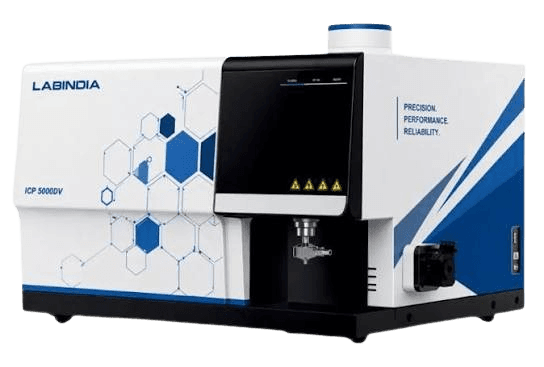
ICP-OES Spectrometer
Dual-view simultaneous multi-element detection with sub-ppb limit of detection.
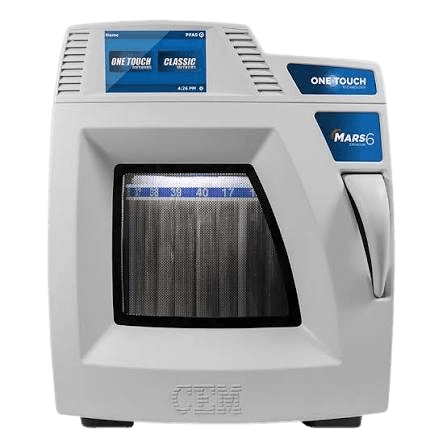
Microwave Digestion System
Complete matrix breakdown and total recovery of volatile trace elements.
Regulatory Framework & Standards
Testing protocols aligned with domestic and global health authority requirements
Sample Submission Guidelines
Dispatch specifications for guaranteed analytical integrity
Technical & Regulatory Inquiries
Why is microwave digestion superior for elemental analysis?
Open-beaker acid digestion can lead to volatile element loss (such as Arsenic, Mercury, and Osmium) and incomplete digestion. Closed-vessel microwave digestion under high temperature and pressure achieves complete dissolution of complex matrices with zero volatile loss.
Which elemental classes are mandatory for testing?
Class 1 elements (As, Cd, Pb, Hg) are mandatory across all drug delivery routes due to high human toxicity. Class 2A (V, Co, Ni) must be assessed for oral and parenteral products, while other classes depend on manufacturing catalysts and excipient risk assessments.
Initiate Your Elemental Impurities (ICH Q3D) Testing
Contact our analytical laboratory in Vapi to review your protocol requirements, discuss sample shipping, or schedule a facility audit.